Abdellah Taheri
The ForgivenAbdellah Taheri is Driss’s father and the central figure in the episode in which his son’s body is claimed from the visitors at Azna. He arrives not to offer an account of the death but to seek his only son and insist that David, the man responsible, accompany the body to Tafal’aalt for burial. His controlled manner gives the request its force: grief is present, but he expresses it through restraint, persistence, and a carefully made demand for responsibility.
Identity and Arrival
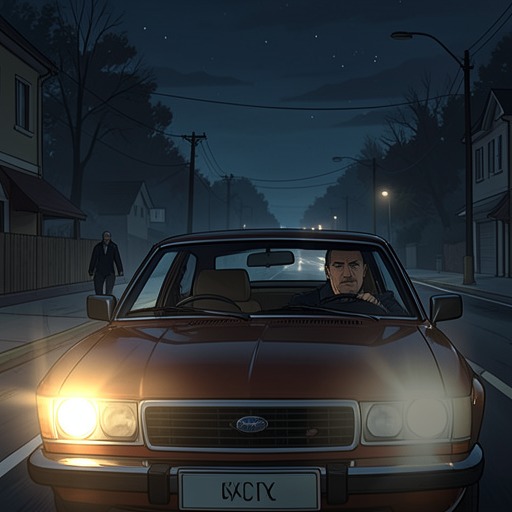
Abdellah introduces himself as a member of the Aït Kebbash from Tafal’aalt. He comes with several men in a battered Toyota jeep, carrying the signs of a long journey: the vehicle is patched and damaged, the men’s clothes are coated in grit and sand, and a sack of uncooked rice lies on the backseat. The men of Azna sense that the visitors have weapons, though none are visible. Abdellah, however, approaches the closed gate alone. He removes his cap, kneels in the dust, and asks repeatedly to be heard and admitted. The contrast is defining: a guarded arrival surrounds him, but his first appeal is made through words and a posture of deliberate humility.
His repeated request reaches Hamid, who has expected the arrival, and then the guests. Abdellah’s voice carries across the wind without hysteria or emotional display. The narration compares its repetition to a hammer blow: it produces movement at the gate. When the gate opens, Abdellah rises slowly, brushes the dust from his knees, and replaces his cap. The opening is not merely a change in access; it marks the moment his appeal enters the household and makes the visitors confront the family of the dead man.
Fatherhood and the Encounter with Driss
Hamid asks where the visitors have come from, and Abdellah identifies Driss as his only son. The exchange establishes the intimate scale of the loss before the body is brought into focus. The visitors’ journey has begun as a claim for a son; the encounter that follows makes that claim irrevocable.
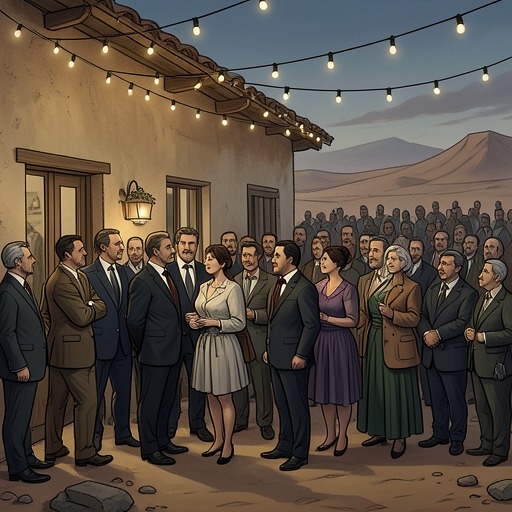
When Driss is laid out in the center of the room, Abdellah is allowed to approach him alone. The staff watch from nearby, conscious that they are witnessing both a father’s bereavement and the injustice surrounding it. Abdellah’s response is described as outwardly restrained: he does not move his lips or blink, and his hands hang at his sides as he looks at his son. The narration presents this stillness not as an absence of feeling but as a limit reached under the shock of seeing Driss transformed from a living person into a body. He absorbs what he sees until, in the account’s striking formulation, grief empties rather than fills him. His composure therefore has a double meaning: it conceals no easy acceptance, but registers a loss so overwhelming that outward response seems suspended.
The Journey from Tafal’aalt
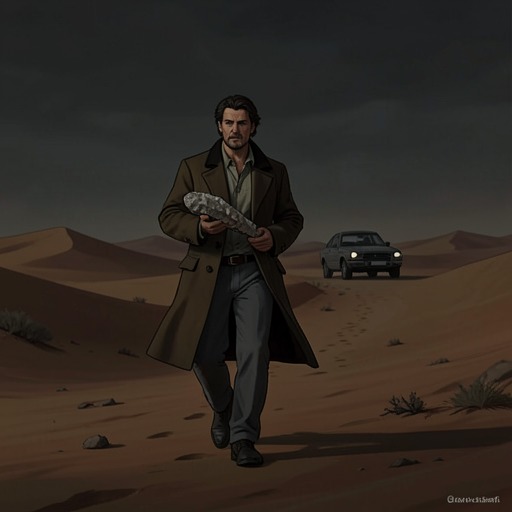
Abdellah’s home is described as a village of about one hundred people, beyond the remote fossil town of Alnif, at the far edge of the Tafilalet. The oasis there is drying and the desert plain advancing. The people explain that their livelihood comes from quarries around the Jbel Issomour massif, where trilobites and aquifers are found. They also identify Hmor Lagdad, the Red-Cheeked One, a mountain visible from a great distance and known from the quarries outside Erfoud. These details situate Abdellah’s appeal in a remote community whose daily life is tied to the land and its fossil workings; the request to return Driss is a journey back to that specific home, not an abstract demand for redress.
The exchange about the death is brief. Hamid expresses sorrow, while Abdellah answers with a statement accepting that Allah has made events as they are. The words do not erase the loss or settle the question of responsibility. Soon afterward, Abdellah approaches the body, and later speaks with Hamid about what should happen next. In that sequence, acceptance of fate coexists with insistence on a concrete human obligation.
The Demand for David’s Responsibility
Abdellah speaks privately with Hamid while the Europeans remain excluded from the conversation. His speech is measured and persuasive; he emphasizes points with his index finger, and Hamid listens closely. The narrator describes his argument as if it had been prepared and ordered in advance. Abdellah does not simply announce what he wants to the visitors: he first establishes his case with Hamid, who then communicates the proposal to them.
The request is that David return with Abdellah and the others to Tafal’aalt to bury Driss. Hamid explains that Abdellah considers this the proper course for the man responsible for Driss’s death. He presents it as customary in the region and as a father’s request, delivered with respect and reserve. Yet the force of the demand is unmistakable: David’s responsibility is not to end with the death being treated as an accident or with the police’s handling of the matter. Abdellah asks him to participate in the return and burial of the son he killed. At this point, the proposal has been made, but the supplied scene does not establish David’s answer.
Narrative Role and Significance
Abdellah’s arrival changes the moral terms of the episode. Before he appears, the guests can remain distant from the consequences of Driss’s death; his presence brings the dead man’s father to their gate, and his approach to the body makes the loss impossible to reduce to an incident. The narration explicitly contrasts the family’s grief with the visitors’ failure to appear before the local people to explain themselves or apologize, and with the police having let them go without a serious reprimand. Abdellah’s demand gives that injustice a practical form: the person responsible should accompany the dead man home.
His authority in the scene rests less on display than on precision. He kneels, repeats a request until the gate opens, identifies Driss as his only son, and then advances a proposal whose social propriety makes it difficult for Richard to dismiss with ordinary objections. Richard hears about it with disbelief, while Hamid has already been persuaded by Abdellah’s reasoning. The episode thus makes Abdellah a figure of bereavement and an agent of accountability: his controlled speech carries the claim that grief alone is not enough, and that David must face the consequences of Driss’s death in the place where the son belonged.